There's a thing I keep seeing in threads about ChatGPT workflows, and it took me a while to understand what I was looking at.
You've probably seen the posts: someone describes a system they've built. Folders, naming conventions, rules about when or how to start new chats. They explain how they copy-paste context between conversations, or how they keep a separate doc to track what's in which thread. Often they're proud of it. They've solved a problem, and they're eager to share it.
But the more of these I read, the more I started to wonder: what problem, exactly?
The surface answer is "organization." The chat history is a mess, there's no meaningful search, things get lost. Okay, fine. But that doesn't explain the intensity by which people are coping with these systems. People are performing elaborate workarounds to do something the interface won't let them do directly.
And I think that thing is: branching.
The shape of the problem
Here's what I mean. You're 10 prompts into a conversation. You've built up some context, you're making progress on whatever problem you're trying to tackle. Then you realize you want to test a different angle. Not abandon the current line, but go on a tangent.
But you can't. Not really. The chat moves in one direction. If you edit your message, you lose what came after. If you start a new chat, you lose what came before. You're nudged to choose a path when what you actually want is to hold multiple paths open at once.
This sounds like a minor UI complaint, but I've come to believe it touches something more fundamental about how we actually think.
Deep thinking is anything but linear. It's associative, recursive, disorderly even. You go down one path, hit something interesting, realize it connects to something three steps back, want to explore that connection and pull on that thread and see where it leads you. That's not a bug in how you think. Our best thinking is done when we speak out loud (or type). That's how thinking works.

But the chat interface imposes a problematic structure on thinking. One message follows another follows another, like a transcript. And slowly, almost imperceptibly, you start to conform to the structure of the medium. You might notice yourself becoming more careful about how you prompt. You subtly start planning your next question, not so much based on what you want to know, but based on what will keep the thread clean. You've begun managing an interface and it has begun managing you. Affording you a mode of thinking that isn't free.
I notice this most in myself when I'm doing anything complex. If I'm just asking a quick question, the linear format is fine. But if I'm actually trying to figure something out, trying to explore a problem space, the interface starts to feel like a constraint on my cognition.
Memory needs place
The spatial dimension matters too, and I don't think this gets talked about enough.
Consider a book that is dear to you. You roughly know where that lovely passage is. Circa a third of the way in, left page, near the bottom. You have a spatial memory of that book. You orient by position. In a long chat, that disappears. The text is there, technically, but you can't find your way around it. You have no landmark. You've gone astray.
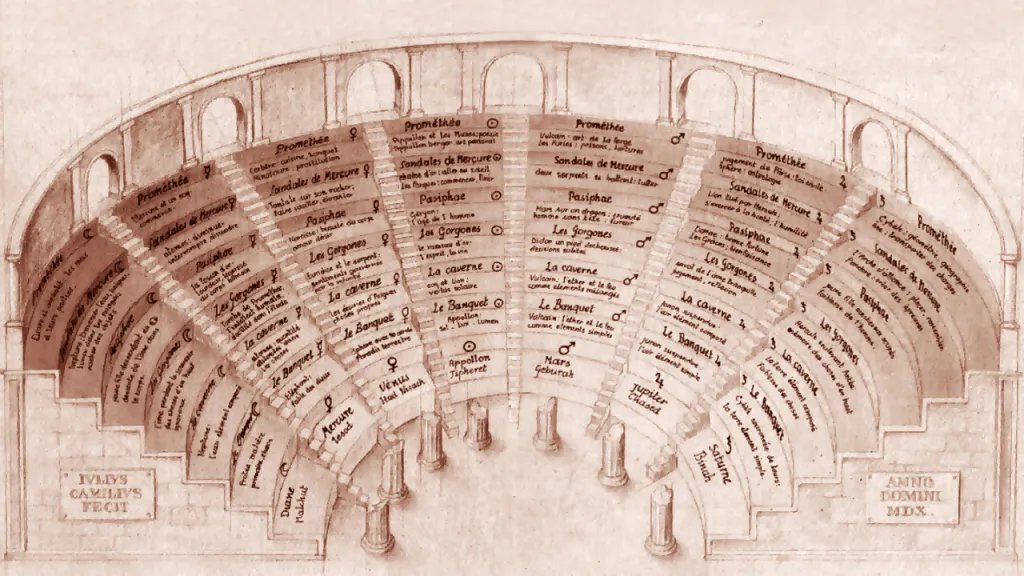
This is why people describe long chats as "tangled" or "chaotic." Not because the UI is ugly, but because they've lost orientation in their own thinking.
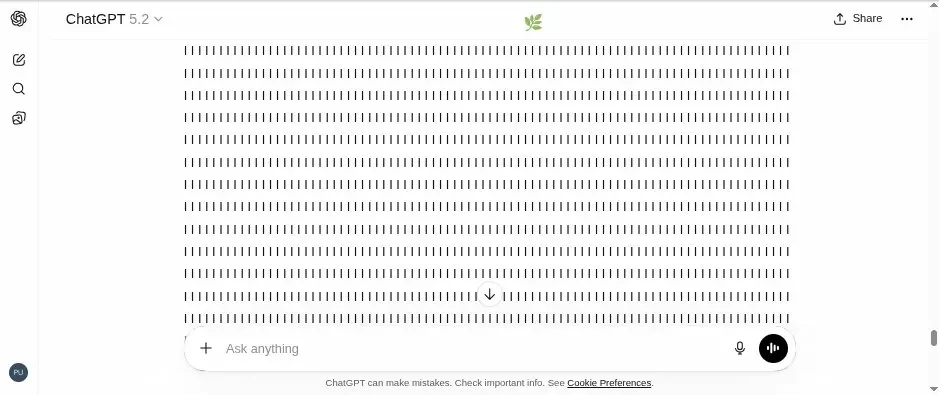
When OpenAI shipped branching, I thought they'd finally solved this. And in a narrow sense, they did. You can fork a conversation into a new chat. But when I actually used it, something felt off. It's like they'd implemented the concept of branching without the experience of it. There's no visual structure. No map. No way to see the shape of the tree or navigate between branches. It felt less like branching and more like opening a new tab.


So I built something
I got kind of obsessed with this gap. Not the feature gap. The conceptual gap. Between what we need from a thinking tool and what we're getting from a chat interface.
Tangent adds real branching to ChatGPT: a visual tree you can see and navigate, the ability to fork from any point, to explore side paths, to come back without losing where you were.
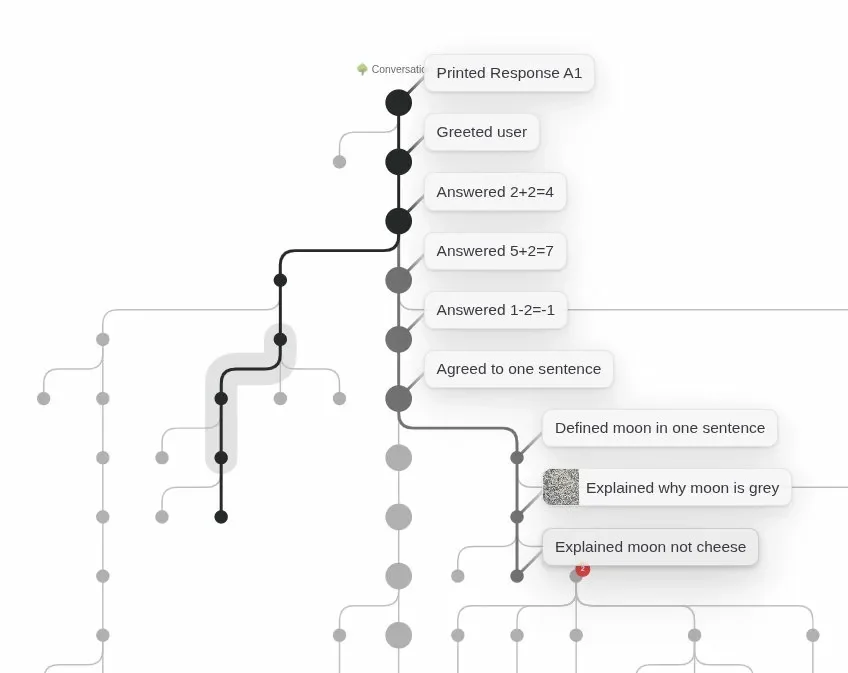
- Branch off at any point, stay in the same view
- A visual tree of your entire conversation
- Hover for one-sentence summaries of each node
- Shift+hover for the full prompt and response
- Jump back to any point instantly
- Archive branches that are no longer useful
- Merge useful context from any branch into another
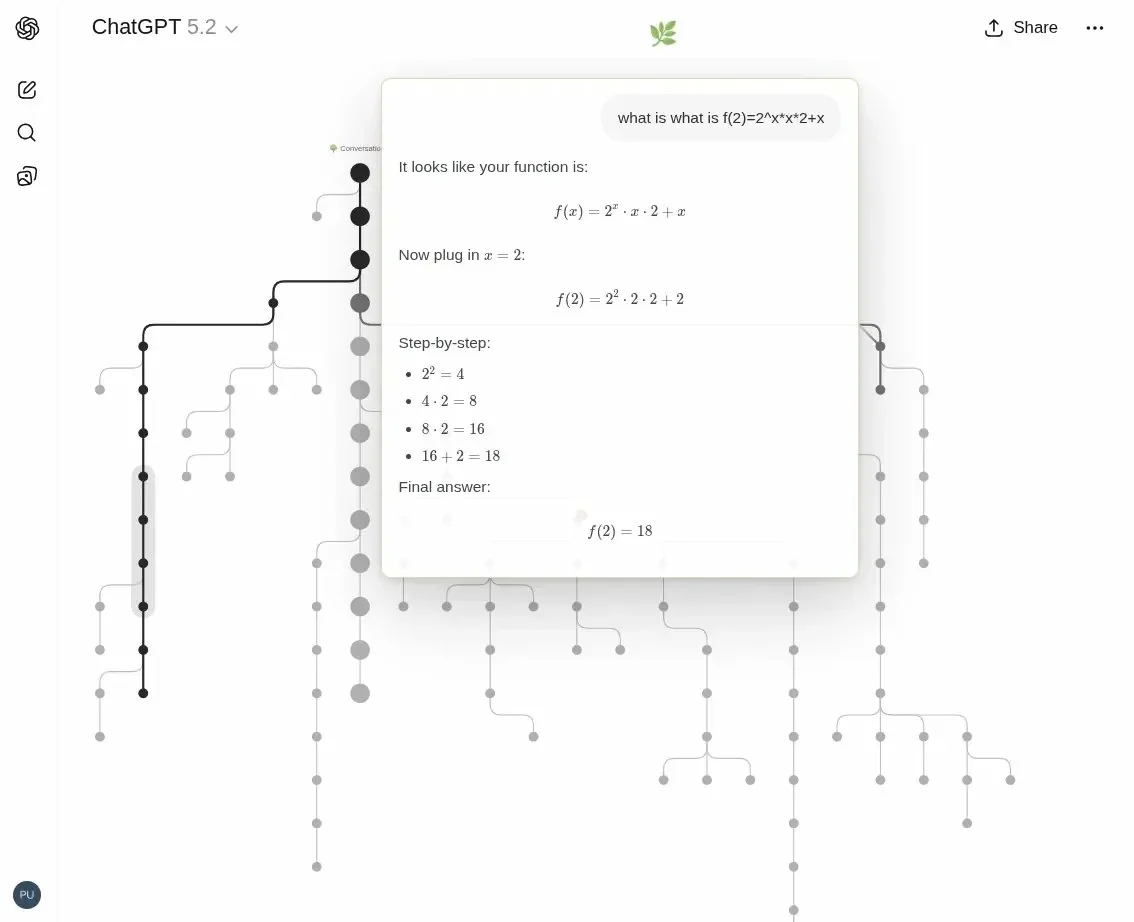
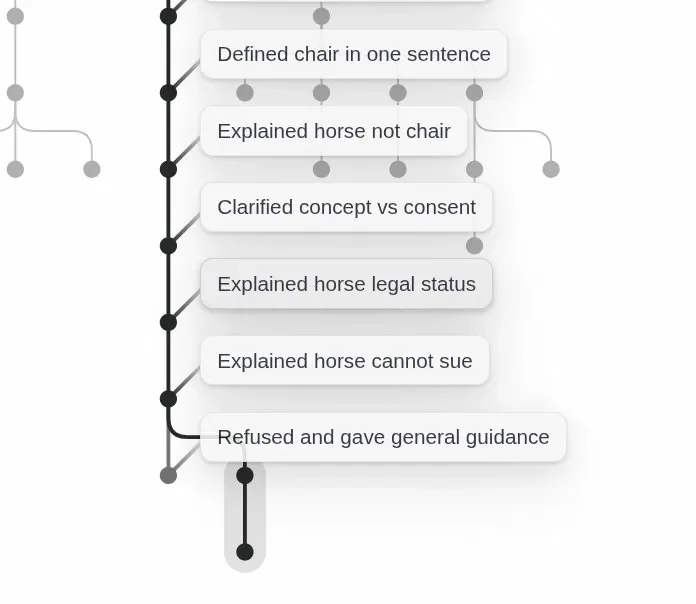
I'm not going to pretend this is the complete solution, but I'm working hard to get as close as I can to the spirit of it. I think there's a larger shift coming in AI UX that's less about smarter models and more about cognitive ergonomics. Tools that don't just answer questions but actually support the structure of thinking that is native to us. That preserve our context, let us navigate, and stop forcing linear workflows on non-linear minds.
So here's the question I keep asking people: do you feel like you're thinking inside ChatGPT, or do you mostly feel like you're fighting the chat interface?
If it's the second one, Tangent is for you.